
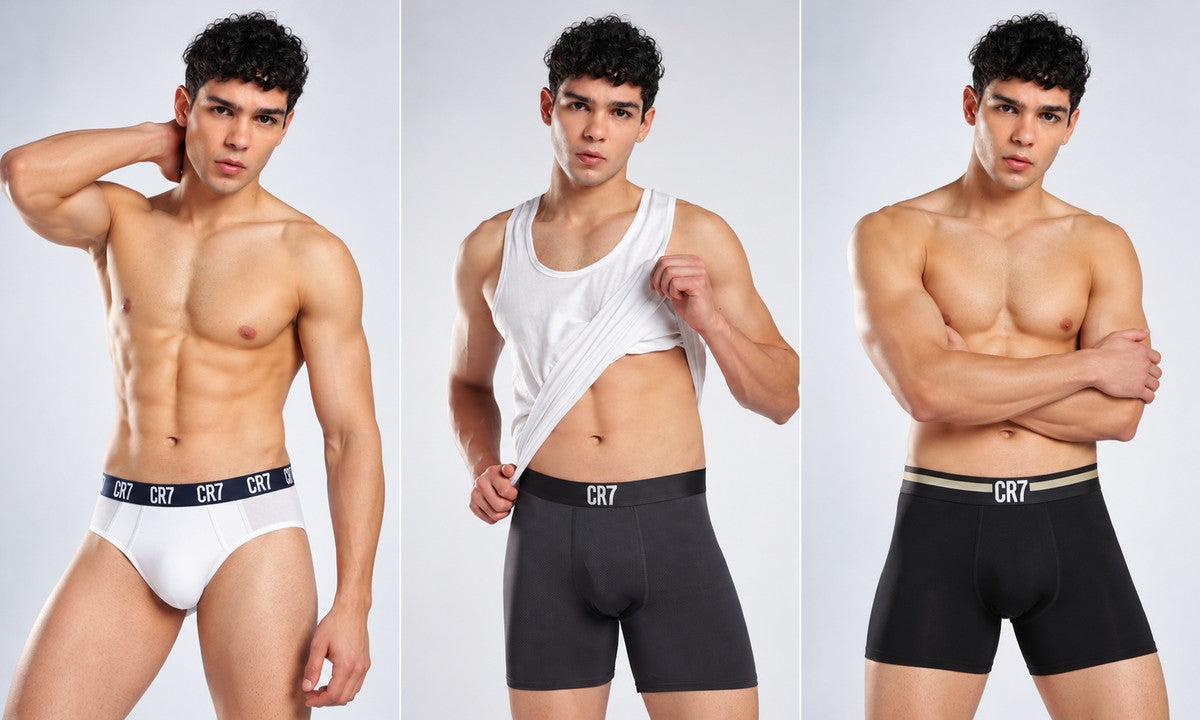
7 Men’s Underwear Types Every Man Should Know
Men’s underwear plays an important role in everyday comfort, yet many people don’t give much thought to the different styles available. Briefs, boxers, trunks, and boxer briefs all offer different levels of support, coverage, and freedom of movement, making some styles better suited to certain outfits, activities, and personal preferences.
With so many options available, understanding the different types of men’s underwear can make it easier to find the right fit for your needs. In this guide, we’ll explore seven popular men’s underwear styles, how they differ, and what each one is best suited for.
7 Types of Men’s Underwear
Here are seven popular types of men’s underwear, each with its own fit, coverage, and level of support to suit different preferences and everyday needs.

-
Briefs
-
Boxers
-
Boxer Briefs
-
Trunks
-
Jockstraps
-
Thongs
-
Long Underwear
1. Briefs
Men's briefs are one of the most recognisable styles of men’s underwear. They have a supportive front pouch and a high-cut leg opening that leaves most of the thighs uncovered. This gives them a compact shape that sits close to the body without adding extra fabric around the legs.
How They Differ: Briefs use less fabric around the legs than boxers and do not extend down the thighs like trunks or boxer briefs. This gives them a more open feel around the legs while still providing good support.
Best Suited For: Men who prefer a close fit, reliable support, and more freedom around the thighs. Their compact shape also makes them practical under fitted trousers, jeans, and shorts.

2. Boxers
Boxers have a loose and relaxed shape, with fabric extending down the upper or middle thigh. They give the legs more room than close-fitting styles, making them a comfortable option for men who prefer less compression.
How They Differ: Boxers have a looser fit and provide more room around the legs than briefs, trunks, and boxer briefs. They also offer less close support than fitted underwear styles.
Best Suited For: Men who prefer relaxed comfort, more airflow, and a loose fit. They work particularly well with relaxed clothing and are often worn for casual use or at home.
3. Boxer Briefs
Men's Boxer briefs combine the close fit of briefs with the longer leg coverage of boxers. They have a fitted front pouch and fabric that extends down the thighs, creating a smooth shape that stays close to the body.
How They Differ: Unlike traditional boxers, boxer briefs have fitted legs rather than a loose cut. They also cover more of the thighs than briefs and usually extend farther down the legs than trunks.
Best Suited For: Men who want a good balance of support, coverage, and freedom of movement. They are suitable for everyday wear, active routines, and fitted clothing.

4. Trunks
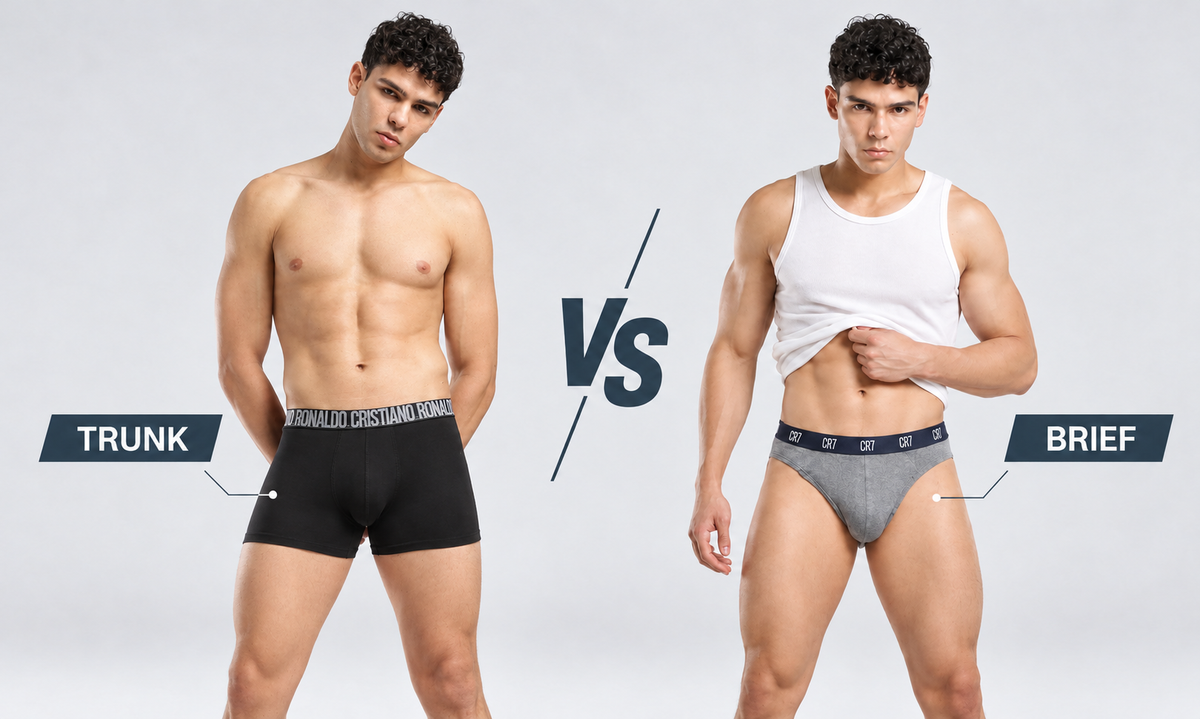
Men's trunk underwear has a shorter leg than boxer briefs while keeping a close fit. Its square-shaped design gives it a modern look and provides more thigh coverage than briefs without the extra length of boxer briefs.
How They Differ: The main difference between trunks and boxer briefs is the leg length. Trunks have a shorter cut, while boxer briefs extend farther down the thighs. Compared with briefs, trunks provide more coverage while keeping a close fit.
Best Suited For: Men who prefer a fitted style with short legs and moderate coverage. Their compact shape also works well under jeans, trousers, and other fitted clothing.

5. Jockstraps
Jockstraps have a distinctive design with a supportive front pouch and an open back. Straps run underneath and around the buttocks, leaving much of the rear uncovered while keeping the front securely supported.
How They Differ: Unlike most traditional underwear, jockstraps provide very little coverage at the back. Their design focuses more on support, airflow, and freedom of movement than full coverage.
Best Suited For: Men who want extra support and freedom of movement during sports or physical activities. They can also suit those who prefer an open-back underwear style.
6. Thongs
Men’s thongs have minimal fabric at the back while keeping a supportive front pouch. A narrow strip connects the front and rear sections, leaving most of the buttocks uncovered.
How They Differ: Thongs provide much less rear coverage than briefs, boxers, trunks, and boxer briefs. Their design uses minimal fabric while still providing support at the front.
Best Suited For: Men who prefer minimal coverage or want to reduce visible underwear lines under fitted trousers, shorts, or other close-fitting clothing.
7. Long Underwear
Long underwear, also known as long johns, provides coverage from the waist down to the ankles. Unlike shorter underwear styles, it is mainly designed to provide warmth and act as an extra layer underneath outer clothing.
How They Differ: Long underwear provides much more coverage than briefs, boxers, trunks, and boxer briefs. Its main purpose is warmth and insulation rather than minimal coverage or maximum airflow.
Best Suited For: Men who live in or travel to colder climates and need an extra layer of warmth under trousers or other outerwear.
How to Choose the Right Type of Men’s Underwear
The best type of underwear for men depends on comfort, fit, clothing, activity, and personal preference. Men who usually wear fitted trousers may prefer briefs, trunks, or boxer briefs, while those who prefer a loose and relaxed fit may find traditional boxers more comfortable.
- For Everyday Wear: Briefs, boxer briefs, and trunks offer a good balance of support and comfort for daily activities.
- For Relaxed Comfort: Boxers provide more room around the thighs and a looser feel, making them suitable for casual clothing and relaxed settings.
- For Active Wear: Boxer briefs and briefs provide a close fit that stays in place during movement. Jockstraps can also be suitable for activities where support and airflow are important.
- For Fitted Clothing: Briefs and trunks have a compact shape that works well under fitted trousers and jeans. Boxer briefs can also be a good option when they fit smoothly without bunching.
- For Cold Weather: Long underwear provides extra coverage and warmth when worn underneath trousers or other outer layers.
- For Minimal Coverage: Thongs offer minimal rear coverage, while briefs provide a more traditional style with less fabric around the thighs.
Final Thoughts
The wide range of Men’s Underwear Types gives men plenty of options based on comfort, coverage, support, clothing, and lifestyle. Briefs, boxers, boxer briefs, trunks, jockstraps, thongs, and long underwear each have a different design and purpose.
There is no single style that works for everyone. Understanding all types of men's underwear makes it easier to compare the differences and find an option that feels comfortable, fits well, and suits your everyday routine.
FAQs
Which type of men’s underwear is best for everyday wear?
Briefs, boxer briefs, and trunks are popular choices for everyday wear because they offer a good balance of support, comfort, and fit. The right option depends on your preferred level of coverage and how you like your underwear to feel throughout the day.
What is the difference between briefs and boxer briefs?
Briefs have short, high-cut legs that leave most of the thighs uncovered. Boxer briefs have longer, fitted legs that provide more coverage while keeping the same close-fitting feel.
Are trunks better than boxer briefs?
Both styles offer a close fit and good support, but trunks have shorter legs than boxer briefs. Trunks are a good choice if you prefer a more compact style, while boxer briefs provide greater thigh coverage.
Are boxers or briefs better for men?
Boxers have a loose, relaxed fit with more room around the legs, while briefs provide closer support with less fabric. The better choice depends on your comfort, clothing, and personal preference.
Which underwear is best for workouts?
Briefs and boxer briefs are suitable for workouts because they stay close to the body and provide good support during movement. Breathable or moisture-managing fabrics can also help improve comfort during exercise.


Leave a comment
This site is protected by hCaptcha and the hCaptcha Privacy Policy and Terms of Service apply.