
Trunks vs Briefs: Which Is Better for Men?
Men’s underwear plays an important role in everyday comfort, but not every style fits or feels the same. Trunks and briefs are two popular choices, each offering a different level of coverage and a distinct design. While both provide support, their leg shape can affect how they feel during movement and under different clothes.
So, when comparing trunks vs briefs, which style should you choose? The answer depends on how much thigh coverage you prefer, how your underwear fits, and what you wear throughout the day. Here’s a closer look at their differences to help you make an informed choice.
What Is the Difference Between Trunks and Briefs?
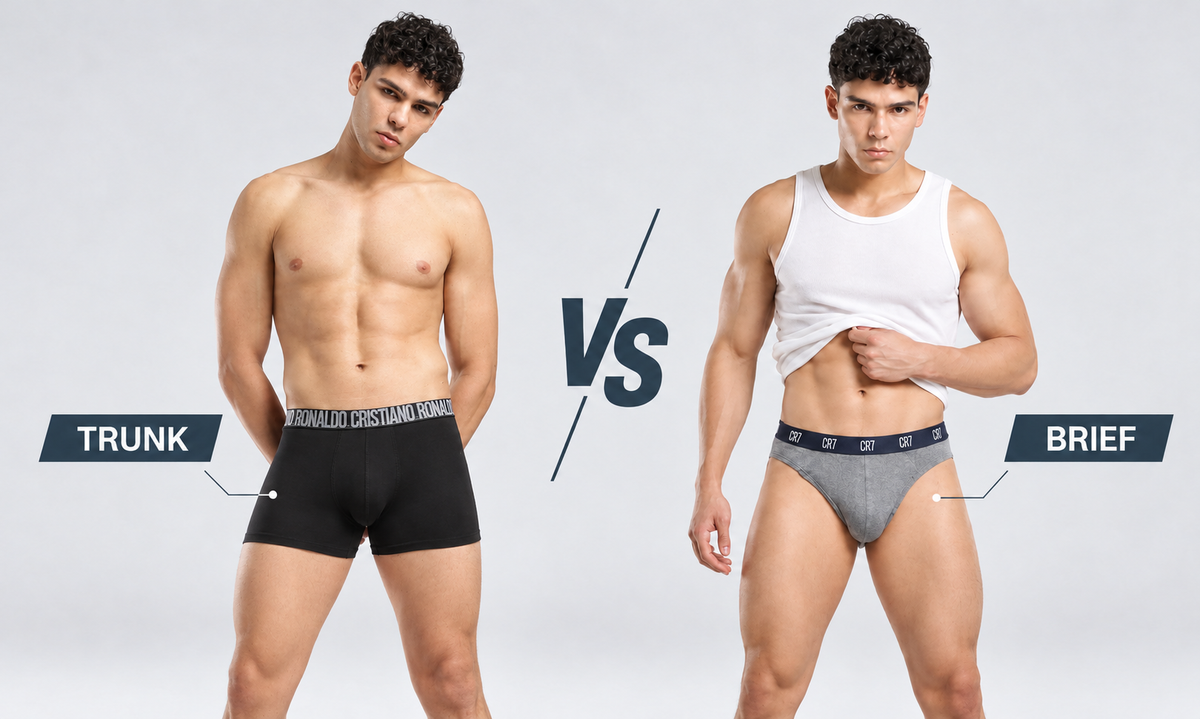
Trunks and briefs are both fitted styles of men’s underwear, but they differ in their leg design and coverage. Briefs have a Y-shaped front, a supportive pouch, and high-cut sides that leave the thighs uncovered. Trunks have a similar supportive fit but feature short, square-cut legs that cover the upper thighs. Briefs are a good option if you prefer less fabric around your legs, while trunks offer a little more coverage without the longer legs of boxer briefs.
What Are Trunks?
Trunks are a style of men’s underwear with a square shape, short legs, and a close fit around the hips and upper thighs. They typically feature a supportive front pouch and a waistband that sits at the waist or hips, depending on the design. Their shorter legs provide more coverage than briefs without extending as far down as boxer briefs.
A men’s trunk can be a good option if you prefer fitted underwear with some coverage around the thighs. Trunks are commonly worn under jeans, casual trousers, and everyday outfits. The right size helps the fabric sit comfortably without bunching up or feeling too tight around the legs.

What Are Briefs?
Briefs are a classic style of men’s underwear with a supportive pouch, high-cut sides, and no fabric covering the thighs. Their design keeps the underwear close to the body while leaving the upper legs uncovered. Depending on the style, briefs may sit higher at the waist or lower around the hips.
Men’s briefs can suit those who prefer a supportive fit with minimal fabric around the legs. They are also an option under fitted trousers and shorts, especially if you want to avoid extra fabric around the thighs. A comfortable fit should hold everything securely without pinching or creating pressure around the waistband or pouch.

Trunks vs Briefs: Key Differences
Although both styles offer a close fit, their construction affects how much coverage they provide and how they feel during different activities. Here are five factors to consider.
1. Fit and Design
Trunks: Trunks have short, square-cut legs that fit closely around the upper thighs. Their design combines a supportive pouch with extra coverage, making them a good option for men who prefer underwear with legs.
Briefs: Briefs have high-cut sides and no leg panels. Their design focuses on support around the front and hips while leaving the thighs uncovered.
2. Thigh Coverage
Trunks: The short leg panels cover part of the upper thighs. This provides more coverage than briefs without the longer legs of boxer briefs.
Briefs: Briefs leave the thighs uncovered, making them a good option for men who prefer less fabric around their legs. Their open design may also feel preferable in warm weather, depending on the fabric and fit.
3. Comfort and Support
Trunks: Trunks provide a supportive pouch and fabric around the upper thighs. When properly fitted, they can feel secure throughout the day. However, tight leg openings may press against the thighs or cause discomfort.
Briefs: Briefs offer front support without fabric around the thighs. Some men prefer this design because there is less material to bunch up around the legs. The waistband and pouch should still fit comfortably.
Neither style is automatically more comfortable. The right size, pouch design, waistband, and fabric matter as much as the underwear style.
4. Freedom of Movement
Trunks: The leg panels on trunks may be noticeable during activities involving repeated bending, squatting, or wide leg movements. A suitable cut can help the fabric stay in place without feeling restrictive.
Briefs: Briefs leave the thighs free from underwear fabric, which some men may prefer during walking, running, or workouts. However, a secure pouch and comfortable waistband are still important for support during movement.
5. Fit Under Different Clothes
Trunks: Trunks can work well under jeans, casual trousers, and relaxed everyday outfits. Their short legs provide additional coverage, but tight leg openings or excess fabric can create visible lines under very fitted clothing.
Briefs: Briefs can work well under slim-fit trousers, tailored pants, and shorts because they have no leg panels. This reduces the amount of fabric beneath the thighs, although the waistband and pouch may still show through some clothing.
Trunks vs Briefs: Which Is Better for Everyday Wear?
Both trunks and briefs can be suitable for everyday wear. The better choice depends on which design feels comfortable throughout your usual routine.
Trunks may suit you if you prefer some thigh coverage and like wearing fitted underwear beneath jeans or casual trousers. Briefs may be a better match if you want a more open leg design and less fabric around your thighs.
Your daily routine can also influence your preference. If you spend long hours sitting, pay attention to pressure around the waistband and leg openings. If you walk frequently or move around a lot, check that the underwear stays in place without bunching or shifting.
When Should You Choose Trunks or Briefs?
Your clothing choices and personal preferences can help you decide which style works best for you.
Choose trunks if you:
-
Prefer short legs that cover part of your upper thighs.
-
Like a square-cut design with a close fit.
-
Want additional coverage under everyday clothing.
-
Feel more comfortable with fabric around your upper legs.
Choose briefs if you:
-
Prefer underwear without leg panels.
-
Want your upper thighs to remain uncovered.
-
Like a compact style under fitted trousers or shorts.
-
Prefer less fabric around your legs during daily activities.
You do not have to stick to one style for every situation. Some men prefer trunks for certain outfits and briefs for others. Trying both in a suitable size is a practical way to find what works for you.
How to Find the Right Fit
Even the right underwear style can feel uncomfortable if the size or cut is wrong. Before settling on trunks or briefs, check how the waistband, pouch, and fabric fit your body.
- Waistband: It should stay in place without digging into your skin.
- Pouch: It should provide support without feeling tight or restrictive.
- Leg openings: For trunks, check that they do not pinch your thighs or ride up. For briefs, make sure the high-cut sides sit comfortably.
- Fabric: Choose a material that feels soft against your skin and suits your daily activities.
- Movement: Sit, walk, and bend to check whether the underwear shifts, bunches, or restricts you.
A good fit should feel secure without requiring constant adjustment. If the waistband rolls, the pouch feels tight, or the leg openings cause discomfort, try a different size or cut.
Final Verdict: Trunks or Briefs?
Trunks and briefs both provide support, but they offer different levels of thigh coverage. Trunks have short legs that cover part of the upper thighs, while briefs leave the thighs uncovered.
Choose trunks if you prefer a square-cut design with extra coverage. Choose briefs if you prefer a compact style with less fabric around the legs. The better option is the one that fits properly, works with your clothing, and feels comfortable throughout the day.
FAQs
1. What is the main difference between trunks and briefs?
Trunks have short, fitted legs that cover part of the upper thighs, while briefs have high-cut sides with no fabric over the thighs. Both provide support, but their coverage and design are different.
2. Are trunks more comfortable than briefs?
Trunks may feel more comfortable if you prefer extra thigh coverage, while briefs may suit you if you prefer less fabric around your legs. Comfort depends on the fit, fabric, and your personal preference.
3. Are briefs better than trunks for movement?
Briefs leave the thighs uncovered, which some men may prefer during activities involving frequent leg movement. Trunks can also allow comfortable movement when the leg openings fit properly and do not restrict the thighs.
4. Which is better under jeans, trunks or briefs?
Both styles can work under jeans. Trunks provide more thigh coverage, while briefs have no leg panels and may feel less bulky under slim-fit jeans. The best choice depends on the fit of your jeans and your preference for coverage.
5. Can I wear trunks or briefs every day?
Yes, both styles are suitable for everyday wear. Choose the correct size and a comfortable fabric, and make sure the underwear stays in place without causing irritation or restricting movement.


Leave a comment
This site is protected by hCaptcha and the hCaptcha Privacy Policy and Terms of Service apply.